
When you think ‘Maserati’, you imagine luxury, tridents and engineering excellence. That’s because this iconic marque has pushed the boundaries of automotive performance for over 100 years, while creating some of the most breathtakingly beautiful designs ever seen.
But as Il Tridente enters a new era, we take a look at the long and wonderful history of Maserati, which started in Bologna at the turn of the century.
A history of Maserati: Family founders
You can trace Maserati’s origin back to a shared family enthusiasm for motorsports and engineering in 1914, created by brothers Alfieri, Ettore and Ernesto. Merely five months later, the outbreak of war between Italy and Austria-Hungary changed the course of events, with the two older brothers being enlisted, leaving the youngest, Ernesto, in charge of the workshop.
During this tumultuous period, Alfieri conceptualized and patented an innovative, more efficient spark plug design, which was used for aircraft engines, including the aircraft flown by the poet Gabriele D’Annunzio during his mission over Vienna.
1920s: The first Maserati and broken records
In 1920, the now iconic Maserati emblem was designed by Mario Maserati (another brother, unconnected to the company), inspired by Neptune’s trident in Bologna’s Piazza Maggiore statue.
In 1926, Alfieri, Ernesto, and Ettore worked on Maserati’s first car: the Tipo 26. Prior to collaborating with his brothers on this creation, Alfieri had been a race car driver for different manufacturers. This first Maserati vehicle marked his shift into manufacturing.
For the Tipo 26’s first race, Alfieri came first in the Grand Prix class – and ninth overall – at the 1926 Targa Florio, establishing the marque’s position as an impressive racing brand.
In 1929, famous driver Baconin Borzacchini set a speed record driving a Maserati V4: a 16-cylinder race car that reached 154 mph (248 km) – a record that would stand for another eight years.
The following year, the Tipo 26M debuted – and won – at the Reale Premio di Roma, with Luigi Arcangeli as the driver. These race feats would eventually help rewrite the history of Maserati.
1930s: Family tragedy and domination at The Indy 500
In 1937, Maserati was confronted by fierce competition from Mercedes and Auto Union (now Audi), which required decisive action. This is when the 8CTF ‘Boyle Special’ was born: a comparatively modest vehicle in contrast to the elaborate approach of the German manufacturers, yet remarkably quick.
The 8CTF dominated the 1939 Indianapolis 500, boasting an average speed of 185 kmh, securing Maserati as the first European brand to claim the championship, which Maserati repeated the following year.
In March, 1932, Alfieri died suddenly from surgical complications at just 44 years old. To protect Maserati’s future, the eldest brother, Bindo, left his job at Isotta Fraschini to become chairman at Maserati.
Beyond WWII: Leaning towards luxury
The history of Maserati must acknowledge the effects of World War Two, which forced the Modena headquarters to shut down. After the war, Maserati began work on its very first GranTurismo: a two-door coupe known as the A6 (for Alfieri) designed by the legendary Sergio Pininfarina.
In the 1950s, Maserati turned its attention to luxury road cars, designing a prototype 3500 GT known as ‘the White Dame’. Such was the car’s opulence, the Iranian Emperor challenged Maserati to build him an even more fabulous vehicle, resulting in the 5000 GT, known as ‘the Shah of Persia’. To this day, it remains an icon of luxury car design.
The 1970s: Famous cars for famous people
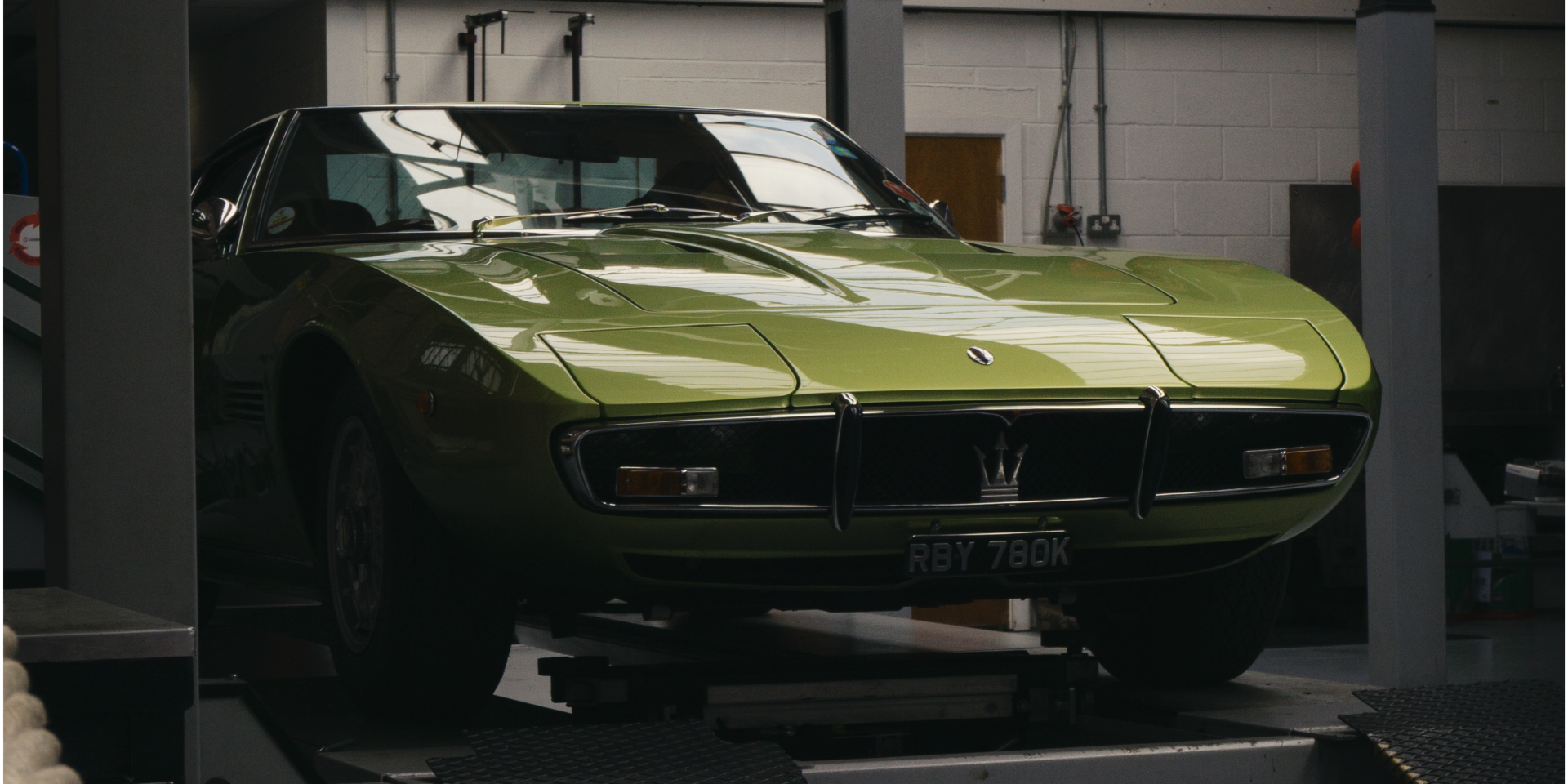
Maserati’s notion of a luxurious sports sedan was initially unveiled to the world with the introduction of the first Quattroporte in 1963. However, it was during the late 1970s and 1980s that this four-door model earned recognition as the chosen vehicle for prominent political figures and Hollywood icons alike.
In 1978, Italian President Sandro Pertini adopted a special Royale edition as his official state car, then, four years afterwards, the Quattroporte appeared on-screen, driven by Sylvester Stallone in Rocky III (1982).
Finally, David Cronenberg featured the car in his 1983 horror film The Dead Zone and his remake of The Fly (1986).
1993: A new future with Ferrari
Fiat acquired Maserati in 1993, then entrusted the management of the Maserati brand to their long-standing competitor, Ferrari. One of the biggest moments in the history of Maserati, this collaboration marked a significant shift from rivalry to cooperation, resulting in mutual growth for both marques.
The initial outcome of this collaboration was the 3200 GT: a coupé styled by Giugiaro and powered by a Ferrari engine, which led to the development of the Spyder: a car that marked Maserati’s return to the US market in 2001 after a 12-year absence.
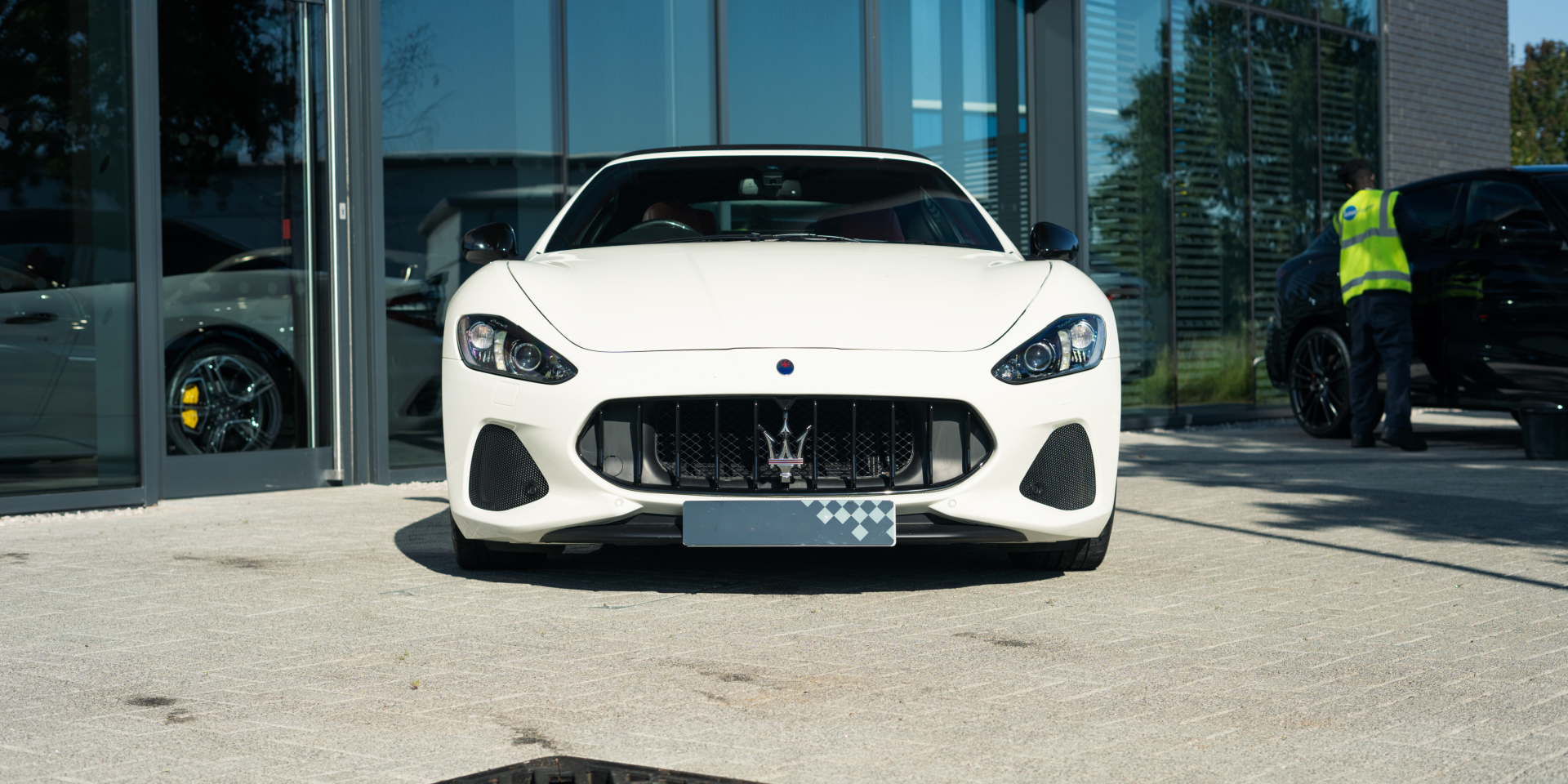
At the Geneva Motor Show in 2007, Maserati revealed the newly Pininfarina-designed GranTurismo, which was larger than previous models and then followed by a Spyder and hardtop convertible soon after.
2023 and beyond: Going electric
The Maserati GranTurismo Folgore: the brand’s first-ever 100% electric car, and the Grecale Folgore: its inaugural full-electric SUV, mark the onset of this transformative journey into electric vehicles.
By 2025, the complete Maserati lineup will feature an electric version for every model, culminating in Maserati’s complete transition to full-electric status by 2030.
A momentous occasion for the Modena-based company, which has consistently looked forward while remaining rooted in its heritage. This transition also holds significance for enthusiasts who cherish the blend of history and contemporary innovation found in Maserati models.
 Please wait...